

Resources for Conversations about Women in Ministry
We're sharing this for no reason at all. Just kidding.

Here at Cultivating Communities, we are fostering conversation and dialogue among church leaders about how to live as deeply-rooted congregations. Sometimes, current events require us to ask new and different questions, to reflect on our church communities in ways we might not have before.
Two weeks ago, C. Christopher Smith shared a post of resources for church leaders who want to think deeply and discern carefully about all things Artificial Intelligence, and how it intersects with our love of God and neighbor.
Catch up on that post here:
Discerning AI Together: Resources for Churches and Church Leaders

Artificial Intelligence has been around for decades (and in a distant era of my life, I worked on the cutting edge of this emerging technology), but its acceleration and mass availability over the last two or three years has brought us to a crucial moment. This is a time in which we need discernment, reflecting together on what this technology
Today, we turn our attention not to a new topic, but one that has been debated and discussed and argued about for what feels like forever: women in church leadership.
We know you’ve seen that earlier this month, the Southern Baptist Convention doubled-down on its exclusion of women from certain ministry roles, namely “pastor/elder/overseer.” For more details on the nature of the resolution and how it came about, see this article from Religion News Service. (And lest we think this is a conversation limited to the SBC, note that the Vatican also released a statement this week barring women from sharing homilies during mass.)
Today, we are not interested in debating this issue. We fully affirm women in any ministry role, including that of pastor or preacher. But our hope today is to encourage us to slow down, read deeply, and reflect thoughtfully on this issue.
“If you see the world through fragments, your empathy often doesn’t kick in, in the way that it does when you engage with something in a sustained, focused way.”
—Stolen Focus by Johann Hari
Personally, this an issue that has been settled in my mind for a long time. And yet, as the SBC resolution came down, I found myself overwhelmed by the inundation of sound bites, hot takes, and social media posts. If you’ve been reading our Substack for awhile, you know we often think and write about attention, and over the past few weeks, I acutely felt the negative impacts of distraction, speed, and algorithms on my attention—and, by extension, my soul.
And so today, I wanted to offer an opportunity to reflect on these current events at a slower-pace. Even if you, like me, are not particularly interested in debating this issue, it is still worth the effort to step away from quickly-moving news feeds, refresh our memories, and deepen our understanding.
This is particularly essential for church leaders because there will be people in your congregation who are have not solidified their thinking on the issue of women in leadership or whose opinions fall on different sides. This is a conversation worth having. Choosing to read deeply and reflect slowly will allow us to dialogue with more clarity, empathy, and curiosity.
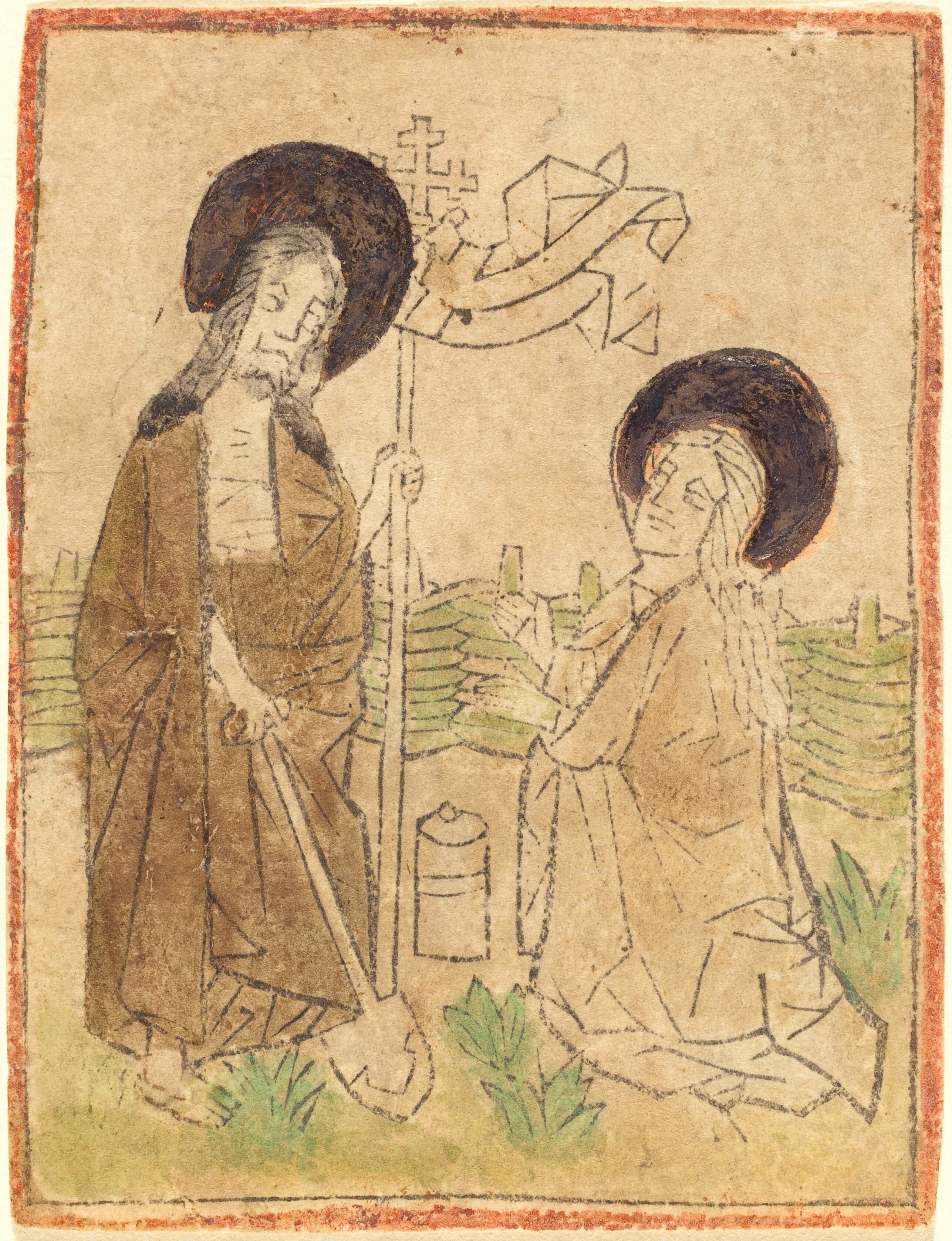
Baptist Women in Ministry
BWIM is a nonprofit that “supports women who pursue ministry and leadership with sustaining resources and community, and advocates for the full affirmation of women in ministry and leadership in Baptist life.”
In their response to the SBC vote, they said:
We express our solidarity with the women in ministry who have been harmed by this vote, the hateful rhetoric and propaganda leading up to the vote, and the damaging theology the vote represents.
Women in ministry deserve affirmation, respect, and the opportunity to follow God’s call. We are heartbroken that they have been denied those fundamental freedoms in the process of this vote.
We further express our disdain for the dangerous messages amplified by the SBC which condone women’s subjugation.
Women and girls, within the SBC and outside of it, deserve empowering messages which celebrate that women are made in God’s image and worthy of equal treatment and opportunity.
What I especially recommend is their pamphlet called “The Bible and Women in Ministry and Leadership.” This 24-page guide is brief and accessible, and it includes a discussion guide and is therefore well suited to church small groups and conversation practices.
Access the pamphlet here.
Listen to the Experts
There are leaders and scholars who have dedicated a great deal of time and sustained attention to this work, and today we’d like to recommend Beth Allison Barr, a writer and professor at Baylor University. But again, we’ll ask you to resist the temptation to simply click a “follow” button and instead, dig in a bit deeper.
Beth’s two books, The Making of Biblical Womanhood and Becoming the Pastor’s Wife1 give context and historical insight into how womanhood and women’s ministry have been conceived in the American church over time.
Along with Savannah Locke, Beth hosts the podcast “All the Buried Women,” which “uncovers the stories of women that are hidden in the Southern Baptist Convention’s archives.” This is a limited series with just 5 episodes, so it does not require a huge investment of time, but is full of compelling storytelling.
One Good Deep-Dive
I really appreciated the Substack article below from Kelley Mathews. Mathews is a writer and editor who writes often about women in the church. In this article, she explores many of the different dynamics at play in the SBC’s most recent moves:
How do we define pastor? Is it synonymous with preacher?
What does the Bible say about church leadership and women in those roles?
What will be the long-term impact of the SBC’s decision making, within their own convention and the American church as a whole?

Don’t Forget Children
Of course, this conversation does not only impact the women in our churches. It also impacts young girls growing up in the church, whose perceptions of themselves and their part in God’s work is being formed now. And of course, it impacts all children regardless of gender, because they are listening to the adults debate whether all humans equally bear the image of God, and who gets to be called, and to what.
Last week at The Englewood Review of Books, I compiled a list of 9 picture books and 1 storybook Bible that feature engaging stories of girls using their voices in a variety of ways.
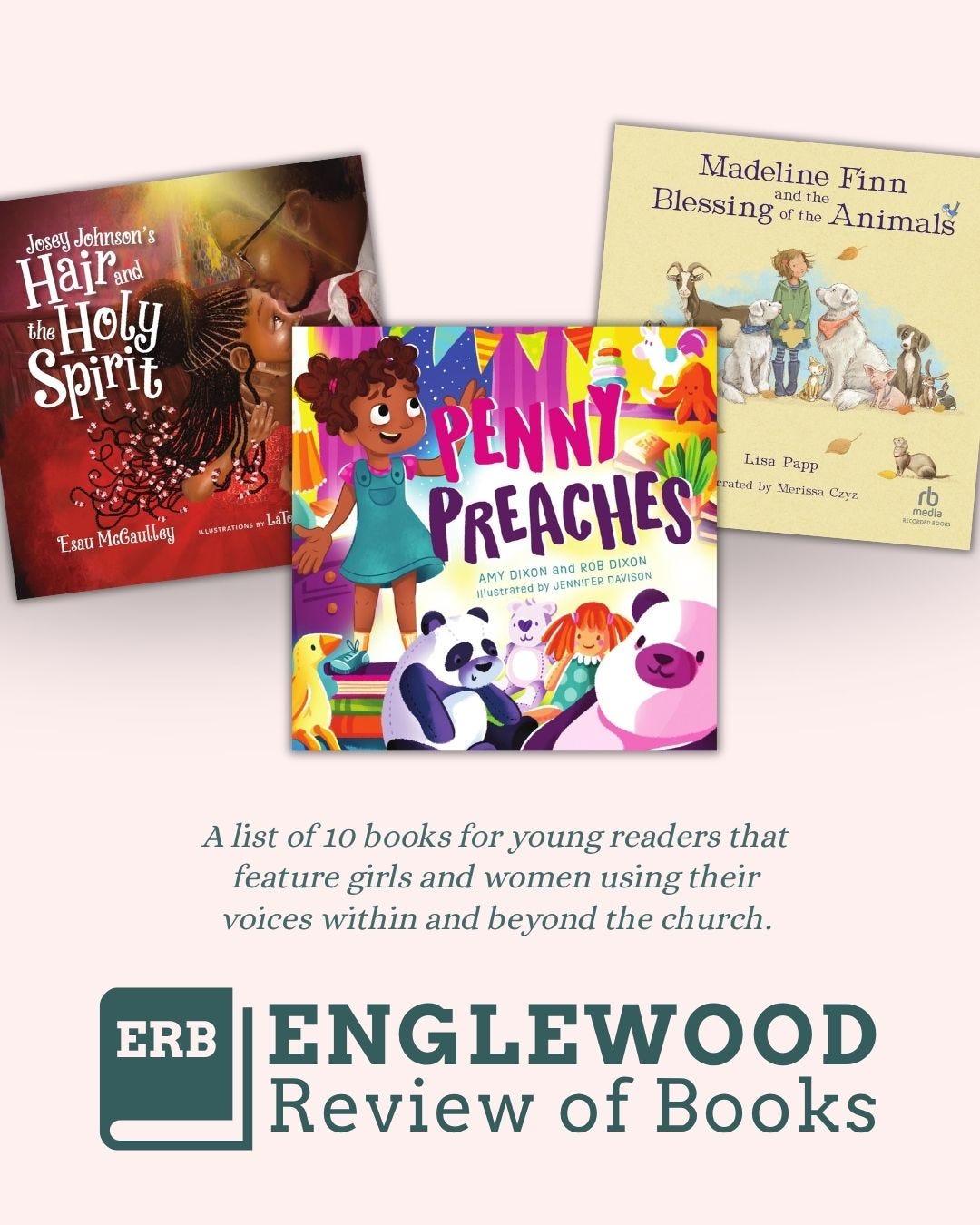
Again, the hope of today’s post is to remind us of the necessity to think beyond sound bites and 140 characters. There are better ways to engage besides retweet and share to stories. And I assure you—I am preaching this to myself!
Thanks for engaging here!
In other news…

We recently launched our new Substack for Thrifty Christian Reader! If you are a reader who enjoys getting great deals on books, ebooks, and audiobooks, you may want to subscribe:
Please note that some links in this post are affiliate links. If you make a purchase via the link, we may earn a small commission. Thank you for supporting our work in this way!
Thanks so much for the shout-out, Lindsey! I appreciate you reading and sharing all of the links you included today.
Surprised you didn't mention the book From Genesis to Junia: An Honest Search for What the Bible Really Says About Women in Leadership by Preston Sprinkle. It's as thorough a look at the controversy regarding women in ministry leadership as I've come across.