

Planting Sequoias - Embodying a Commitment to Literacy in Postliterate Times
A coda to Rose Horowitch's essay in The Atlantic, "The End of Reading is Here"

By now, you may have already seen the much-discussed article “The Age of Reading is Over” by Rose Horowitch, which appears in the August 2026 issue of The Atlantic (and was published online last week under the title “The End of Reading is Here.”) If you haven’t read this piece yet, I highly recommend doing so.
Horowitch makes a powerful case that we are now living in a postliterate era, tracing the history of the rise and fall of literacy and drawing upon the work of media scholars such as Marshall McLuhan, Neil Postman, and Walter Ong. She begins by summarizing our situation:
Some 2,000 years later, under very different circumstances, the darkness is gathering again. Americans, once members of a proudly literate society, read much less than they used to. According to the National Endowment for the Arts, which conducts the most comprehensive survey of the nation’s reading habits, fewer than half of all adults reported having read a book of any kind in 2022. Only 38 percent read a novel or short story. A study analyzing 236,000 responses to the American Time Use Survey found that the proportion of Americans who read for pleasure on any given day fell from 28 percent in 2004 to 16 percent in 2023. (The study looked at people who had read a book, magazine, or newspaper; listened to an audiobook; or read an e-book.) Gambling has become a more common leisure activity than reading a book: Last year, 57 percent of Americans placed a bet.
The decline in reading cuts across age groups, gender, and education levels. Even the demographics that traditionally read the most—retirees, women, and college graduates—have seen a collapse.
The books that people do read are simpler than they used to be. New York Times best sellers today have sentences that are about one-third shorter than they were a century ago. Longer sentences aren’t inherently better. But their former ubiquity suggests an age when Americans had the inclination and ability to read serious works of literature. …
This shift is often referred to as a literacy crisis. And it’s true that Americans’ basic reading skills are declining. Fourth- and eighth-grade reading scores have slid for the past decade. … In 2024, in a national test, just 35 percent of high-school seniors were “proficient” at skills such as analyzing complex fictional themes and evaluating the effectiveness of an author’s argument. About the same number scored below “basic,” meaning that they may struggle to draw conclusions from concepts explicitly included in a text, or to use context clues to determine the meaning of an unknown word. Adult-literacy scores have also dropped: Nearly 30 percent of American adults cannot paraphrase or make inferences from a multipage text. In 2017, that number was less than 20 percent.
And yet, strangely, Americans are probably reading more words than ever before. What has changed is what they read, and how. People are bombarded with emails, text messages, X posts, Reddit threads, Instagram captions. This explosion of textual fragments has come at the expense of devoting sustained attention to longer written works that convey rich and complicated information. Maryanne Wolf, a cognitive neuroscientist at UCLA, argues that people are losing the ability to think deeply about writing. That doesn’t mean they are forgetting how to decode individual words. Rather, they are losing the higher-order abilities of comprehension and synthesis. America, in other words, isn’t illiterate. It’s postliterate.
Although, as Horowitch acknowledges, critics have been writing about our trend toward postliteracy for decades, her essay is one of the most thorough I have read, making her case not only with history, but also with up-to-the-minute evidence. As author of the book Reading for the Common Good, I believe universal literacy is in the best interest of humanity, and I am as alarmed as anyone about the evidence Horowitch offers. However, there is a vital thread missing from her account of the history of literacy.
She recounts how literacy vanished in the early medieval era and then re-emerged at the beginning of the modern era, following the invention of the printing press. But how was literacy sustained in the intervening centuries? Although many libraries were destroyed and popular literacy waned in the early medieval era, literacy did not completely disappear. We might say that it just went underground.
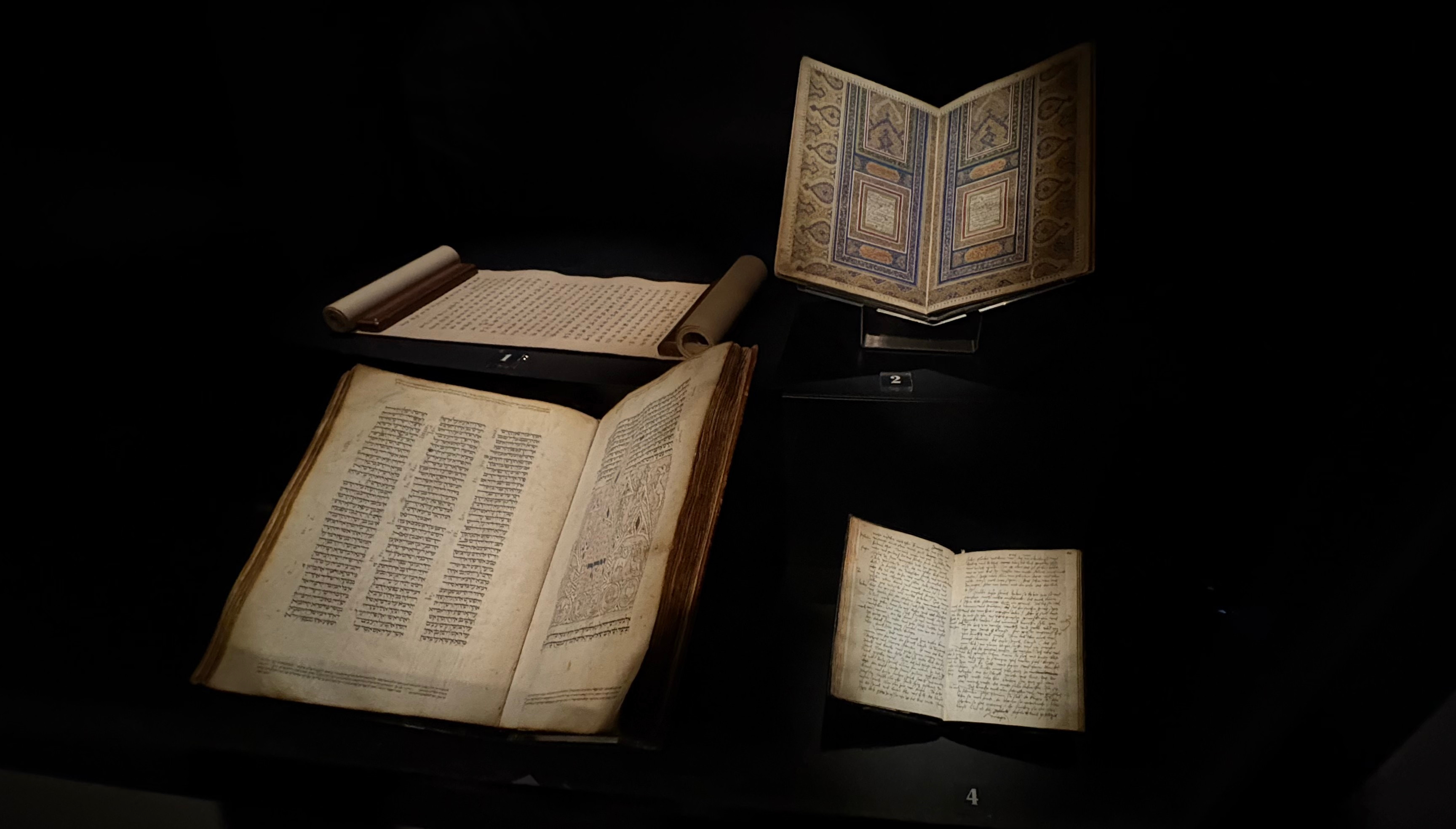
Literacy was preserved through the middle ages primarily by faith communities in the Christian, Islamic, and Judaic traditions, whose very lives were centered around reading and interpreting their holy texts. Perhaps most famously, one strand of this history is recounted in Thomas Cahill’s bestselling book, How the Irish Saved Civilization.1 Cahill describes how Irish monastics of that era worked diligently to preserve and disseminate the texts available to them, and also how they spread literacy to the local communities around the monasteries they planted farther east across the European continent. But the story Cahill tells is only one instance in a much larger history of faith communities preserving and spreading literacy through the middle ages. Many of the extant classics of antiquity (including many writings of Aristotle and key texts in mathematics and the sciences) have been handed down to us through Islamic communities that preserved Arabic translations of the original Greek works. Judaic communities, too, preserved key texts and passed on habits of literacy throughout the medieval centuries of widespread illiteracy.
Yes, we are living in a postliterate era. Yes, we should lament the demise of the modern age of widespread literacy. But the medieval history of faith communities that preserved texts and habits of reading is a hopeful reminder that literacy will likely not completely die off. We are at the dawn of a new era of postliteracy, and it poses a question and decision point for churches and other faith communities: Will we follow the broader culture into the dark night of post-literacy, or will we remain firm in our tradition as people of the book, an interpretative community that strives to remain faithful to its story and tradition in a new, unfamiliar world that is widely hostile to literacy?
“Plant sequoias,” Wendell Berry once advised. “Say that your main crop is the forest / that you did not plant, / that you will not live to harvest.” Cultivating habits of literacy at this moment is a lot like planting sequoias, a long-term investment in the future of humanity that seems almost absurd in the short-term. And yet, our faith communities inherit both a tradition of having done this before and an identity rooted deeply in a particular story that is read, debated, taught, and shared with others. Literacy is who we are. [1]
I’m a book review editor and a person whose lifework has been centered on writing, bookselling, and other facets of publishing, so it goes against my interests to say this, but like Horowitch, I don’t have a lot of hope for public literacy over the remaining years of my lifespan. I do have hope, however, in belonging to a tradition of faithful literacy that spans millennia and that, however difficult it seems for us to imagine at the present, will continue to preserve and cultivate habits of deep and careful reading which will someday blossom again into a new era of public literacy.
What does faithfulness to our tradition of literacy look like in this moment?
(And here, I will only speak to churches and other Christian communities, as this is the particular world in which I am located.)
First, we need to double down on our commitment to read, teach, and grapple with scripture.
Preaching will be one expression of this commitment but cannot be the only one, as waning attention spans may render it pointless without other —more dialogical—ways of reading and making sense of scripture as a community. Classes, small groups, conversation spaces, etc. all should be spaces for exploring scripture together, whether in the form of portions of the text itself, or in the form of theological works that help us reflect on scriptural texts and their meaning.
Second, our commitment to scripture should be one that is reinforced throughout the daily lives of our members and across the whole of their lifespans, from the cradle to the grave.
How do we encourage our members to read, reflect upon, and discuss scripture at home and throughout their lives? How do we introduce our youngest members to scriptural stories and to the language of scripture? (Memorization, for example, is one profoundly important and countercultural task.) How do we keep our oldest members engaged in reading and reflecting on scripture as valuable contributors to our life together?
A third commitment, modeled for us in the medieval faith communities that preserved literacy, is the work of collecting and preserving texts.
One key point on which I disagree with Horowitch is her assertion:
When the Library of Alexandria disappeared, the knowledge inscribed on its scrolls was lost forever. We can only guess what else Eratosthenes and Euclid might have written. The text turned to dust. That won’t happen today; all of the words in the great library could be stored on a single computer chip. Nowadays, even the most obscure academic monographs are scanned and digitized. Google Books and the Internet Archive represent libraries of unfathomable proportions. We can navigate to them with a few keystrokes, not a perilous journey across the Mediterranean. There’s little risk of their texts succumbing to humidity or mice.
These digital collections can just as easily disappear from lack of use or lack of profitably. They also are dependent upon the persistence of internet technologies, which may not last forever, and digital libraries might not survive transitions to future iterations of digital communication, if there is not the desire or will to make them available. Church libraries, although diminished or defunct in many congregations, will be crucial for sustaining literacy, and not merely collecting books that are never read, but also incorporating practices that encourage the reading and sharing of our collections.
A fourth and final expression of our commitment as churches to preserve literacy is a commitment to resist the manifold temptations of artificial intelligence.
Don’t use it to write your sermons. Don’t use it to structure your curricula. Don’t use it to summarize books for you. Simply don’t use it! Horowitch writes:
If AI writing is pleasing and convincing, however, it is also unoriginal, often inaccurate, or both. People will therefore need their powers of discernment and comprehension more than ever. They will need to know what they think and how to make their own judgments. These are the exact skills that the use of AI threatens to erode. What’s at risk is nothing less than the ability to think for oneself. If people become overreliant on AI to write for them, they could lose the capacity to interrogate or even develop their own views. These are quintessentially human capacities. “If we gave those up,” the NYU philosopher Kwame Anthony Appiah told me, “we’d stop being the kind of humans that we are. We’d be very different creatures.”
I encourage you, in reading her essay, especially to pay attention to her reflections on the threats that AI poses. I should add as a caveat here that church leaders can, I think, resist AI in nonjudgmental ways: leading by example, creating opportunities for discussion of AI, and not turning use of AI into a matter of law or shame.
The late German theologian Gerhard Lohfink often spoke compellingly of the church as a “contrast-society.” Our local congregations are called not just to oppose the forces of darkness and evil in the world, but to offer an attractive and contrasting alternative. I cannot think of a distinct contrast in these increasingly postliterate times than to be communities actively and intentionally committed to the work of literacy.
Tell us about the practices of literacy that are parts of your church’s life.
For further reading:
I explore the potential of local church communities in preserving literacy in much greater detail in my book, Reading for the Common Good. (You can get a free digital copy of the book, when you subscribe to The Englewood Review of Books free weekly newsletter. )
If you appreciated Horowitch’s essay, you might also appreciate our series of posts from last year that reflect on the 40th anniversary of Neil Postman’s important book, Amusing Ourselves to Death. Here is the final post in that series, and you can link back to previous posts in the series from it.)
We first saw Horowitch’s essay linked in The Christian Century’s Books Worth Reading newsletter. If you enjoy our work here or at The Englewood Review of Books, you would likely enjoy their newsletter as well! Sign up here.
Please note that some links in this post are affiliate links. If you make a purchase via the link, we may earn a small commission. Thank you for supporting our work in this way!
Good, scary, hopeful stuff.